
One-step grafting technique for implant preparation
Dr. Miroshnik Vladislav, DMD, Ashdod, Israel
Material and method: vertical and horizontal ridge augmentation using SpongeGraft. Immediate implant placement. 4 months post-op: panoramic + CT.
 Sterile, sealed boxes
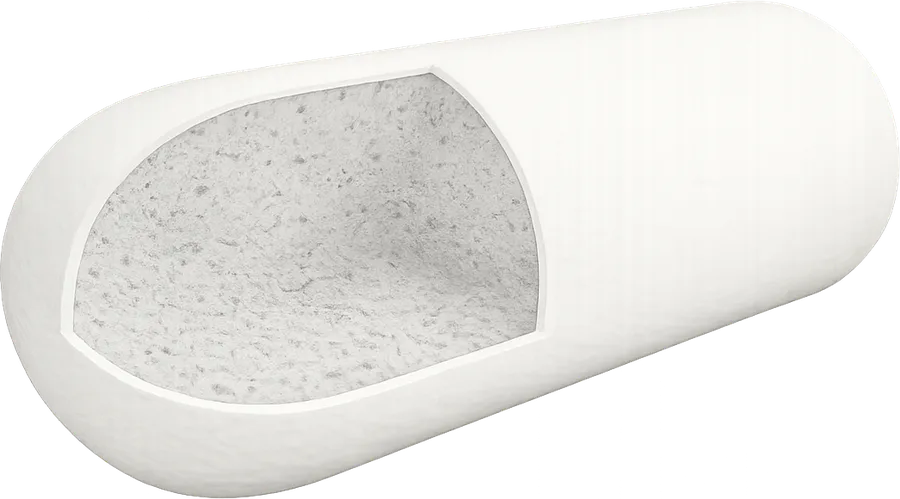
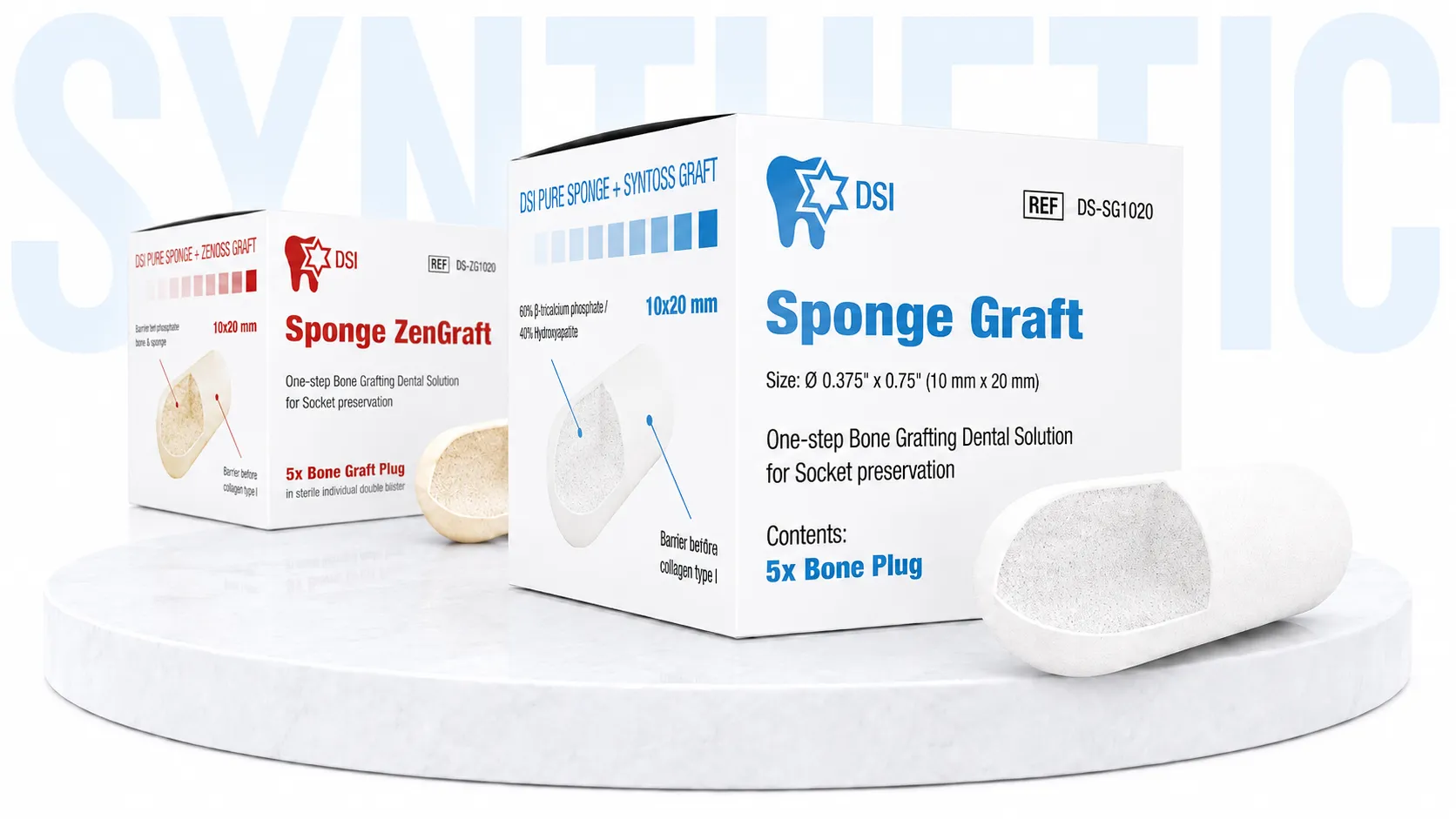
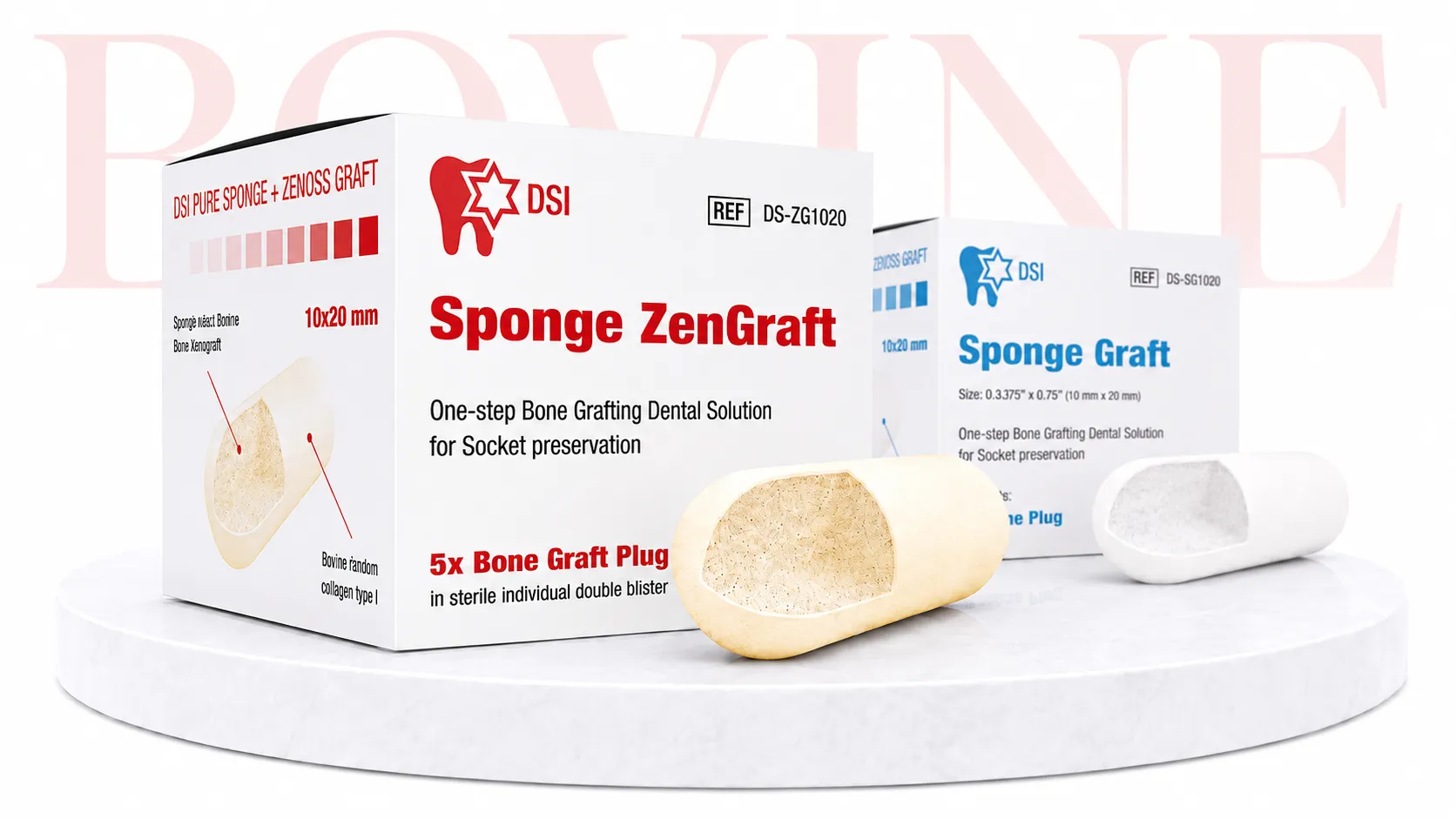
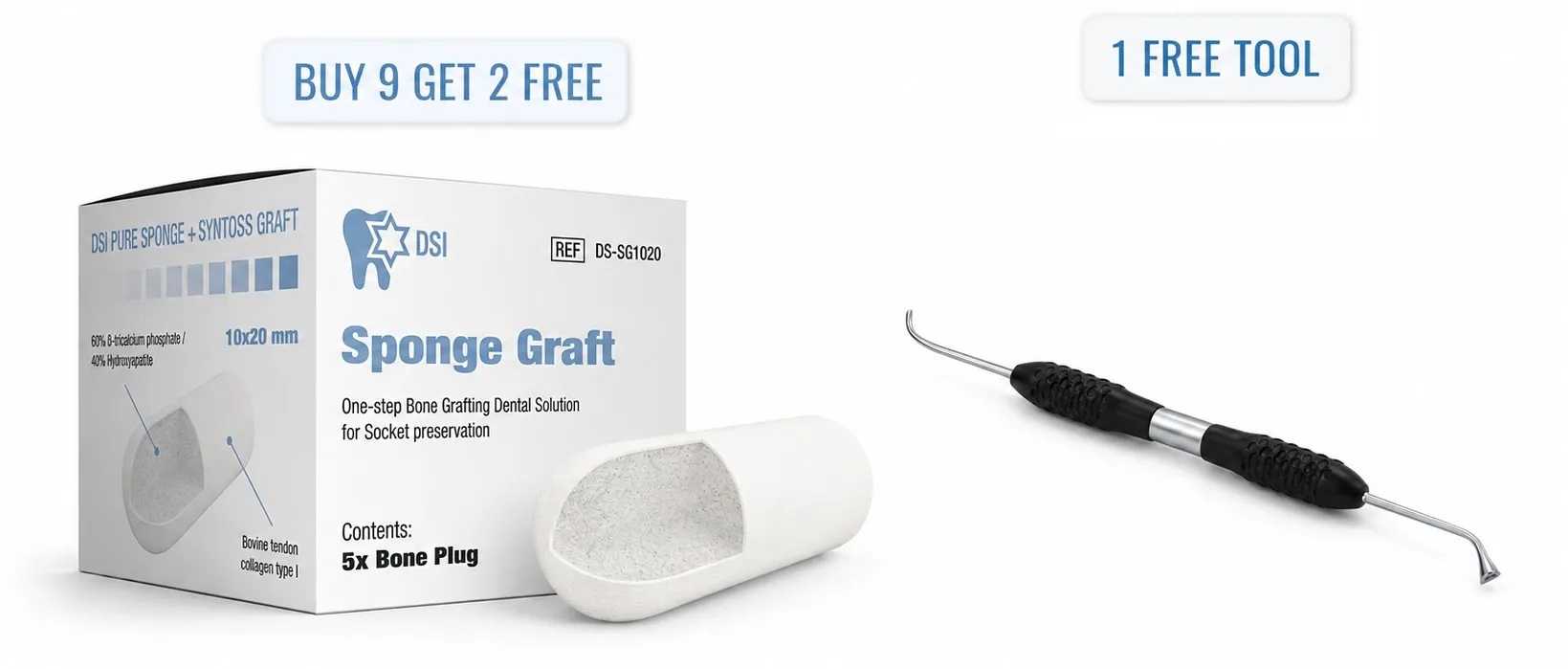
A sterile collagen bone graft plug carrying a synthetic β-TCP and hydroxyapatite mineral . Placed dry at extraction, no mixing, no separate membrane. The routine choice for everyday sockets.
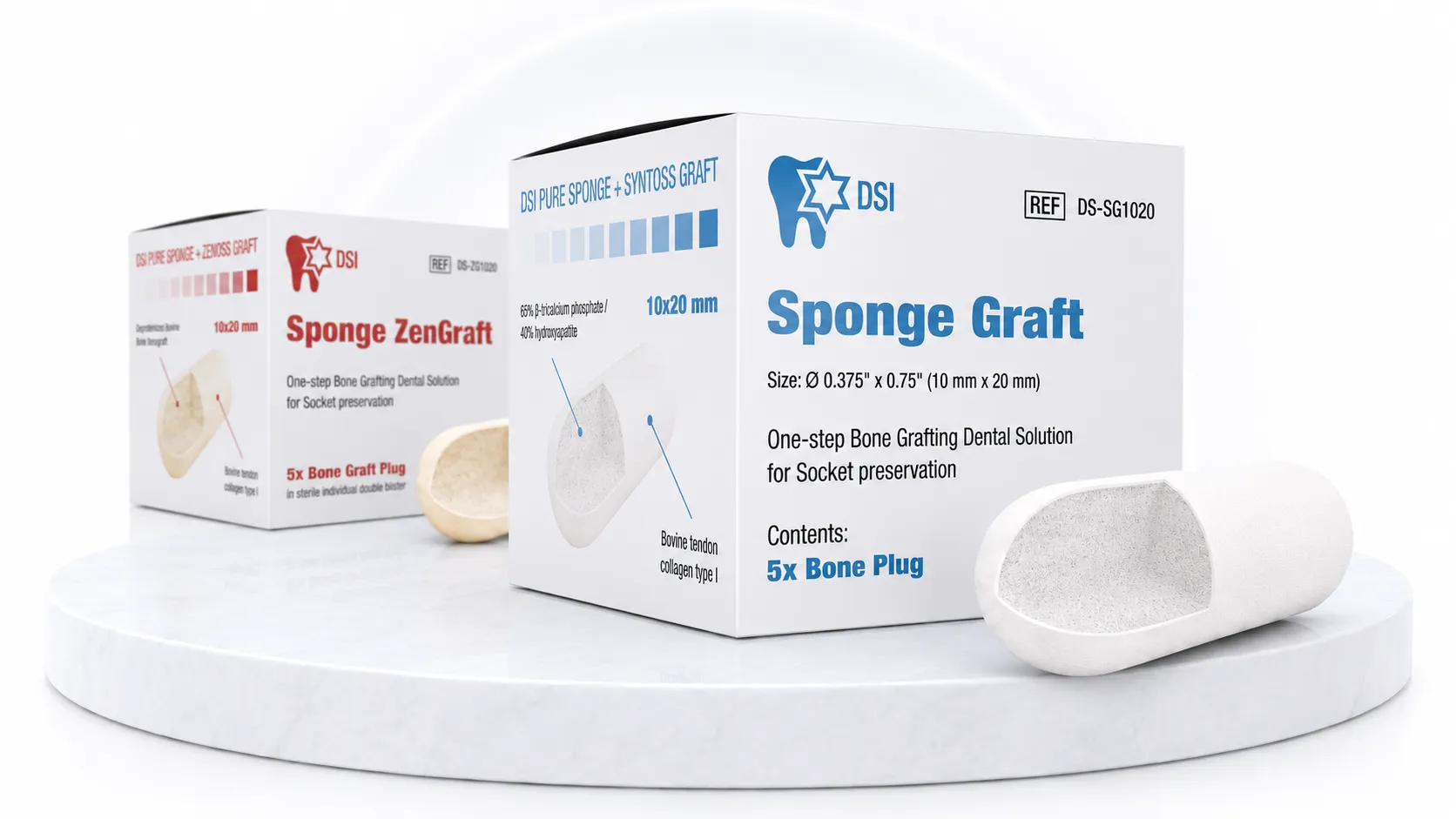
Boxed in 5 units, 10x20mm sterile plug in each. A simple alternative to your typical allograft and membrane technique to repair a defect, with less to dislodge or wash out than a particulate-and-membrane technique.
The ideal indication is following an atraumatic extraction when all walls are preserved.
In intact, contained sockets, no separate membrane is needed . Place the plug dry and suture over it.
An osteoconductive scaffold the patient’s own bone forms along, ahead of implant placement.
Choosing between them
The mineral inside the collagen is the whole difference. It sets how fast the graft resorbs, and that, in turn, sets how long the ridge keeps its volume.
| Property | SpongeGraft | Sponge ZenGraft |
|---|---|---|
| Reference | DS-SG1020 | DS-ZG1020 |
| Plug size | 10 × 20 mm | 10 × 20 mm |
| Plugs per box | 5 | 5 |
| Collagen carrier | Bovine tendon collagen Type I | Bovine tendon collagen Type I |
| Mineral phase | 60% β-TCP / 40% hydroxyapatite (synthetic) | Deproteinized bovine bone xenograft |
| Resorption | Balanced (β-TCP faster, HA slower) | Slow, for long-term volume maintenance |
| Packaging | Sterile individual double blister | Sterile individual double blister |
| Placement | One-step, place dry | One-step, place dry |
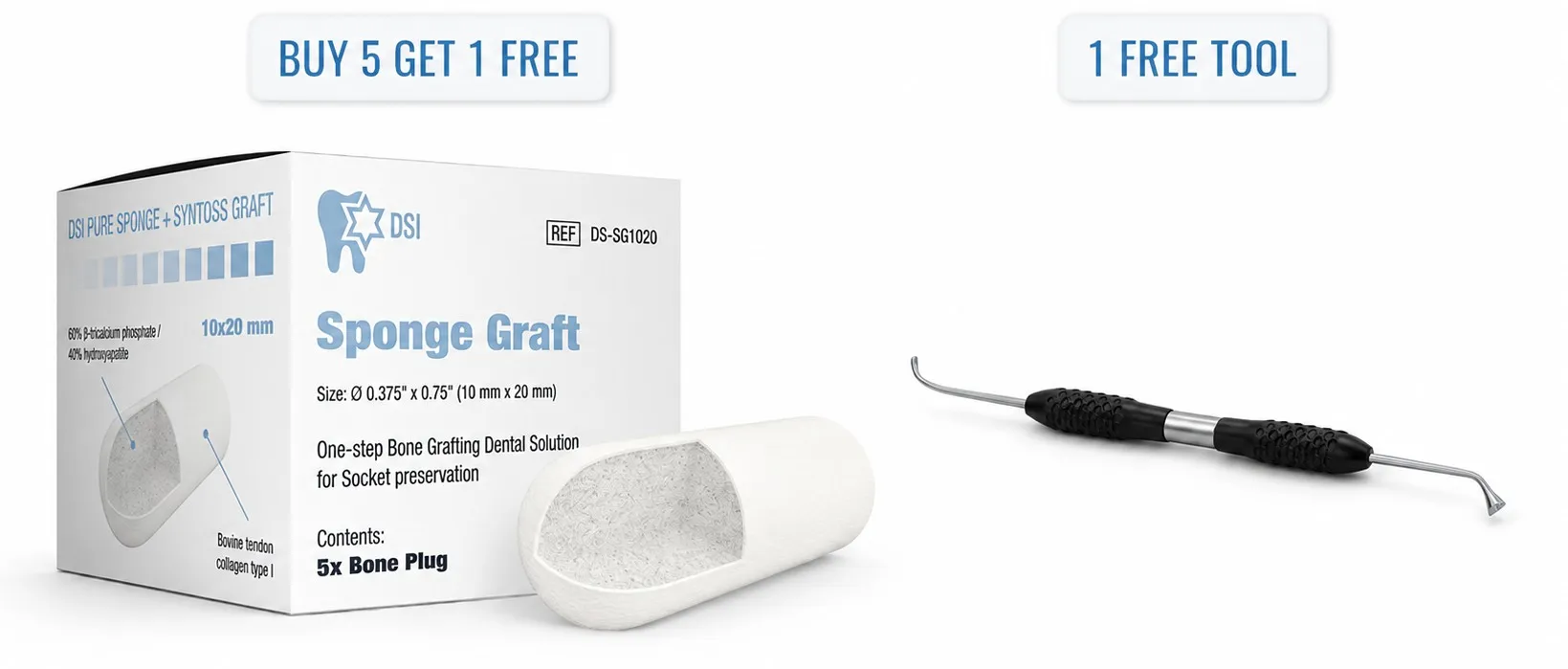
SpongeGraft · β-TCP + hydroxyapatite. Turns over faster of the two , because the β-TCP fraction is the more soluble of the pair. It is osteoconductive: the patient’s own bone forms along the scaffold rather than being induced by it, and published human histology of β-TCP/HA grafts still finds residual particles at around six months. Generally chosen for routine sockets where a synthetic mineral is preferred.
We Ship Next Day
What’s included
Practice Pack
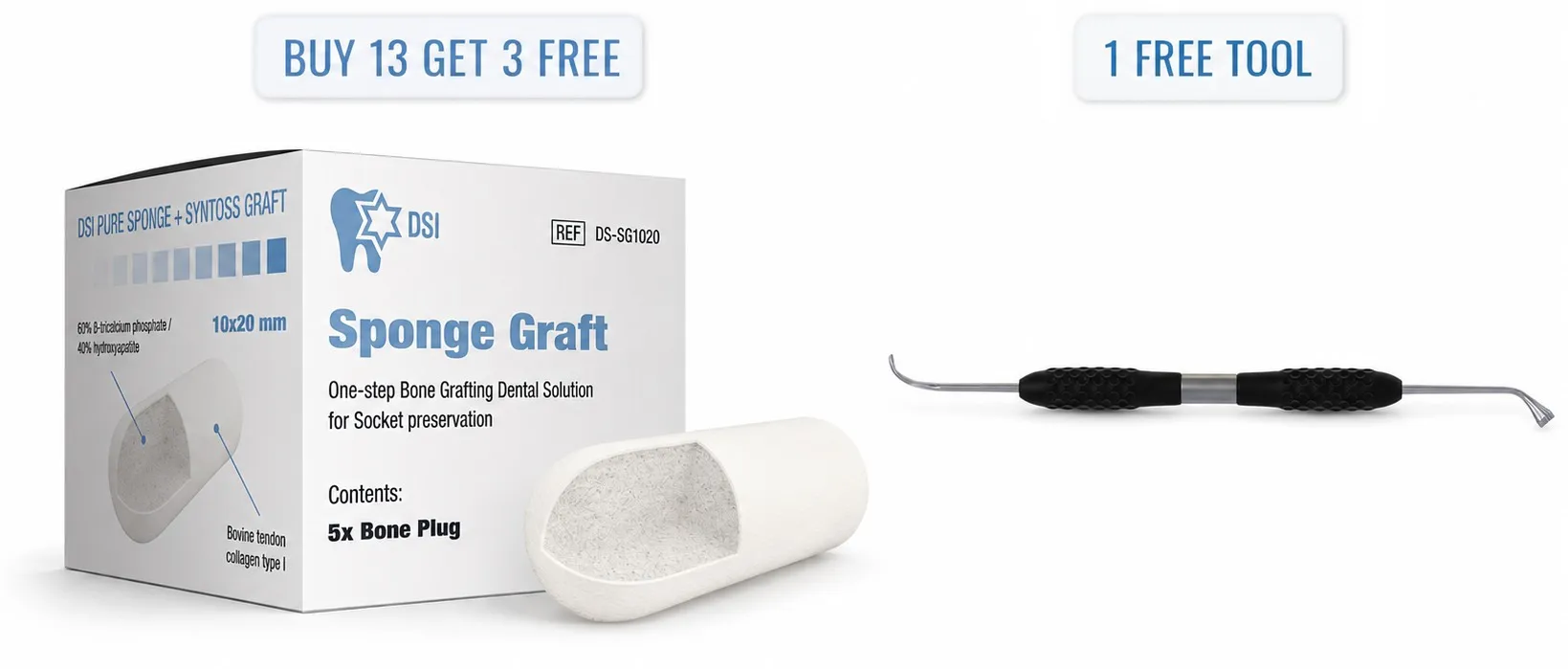
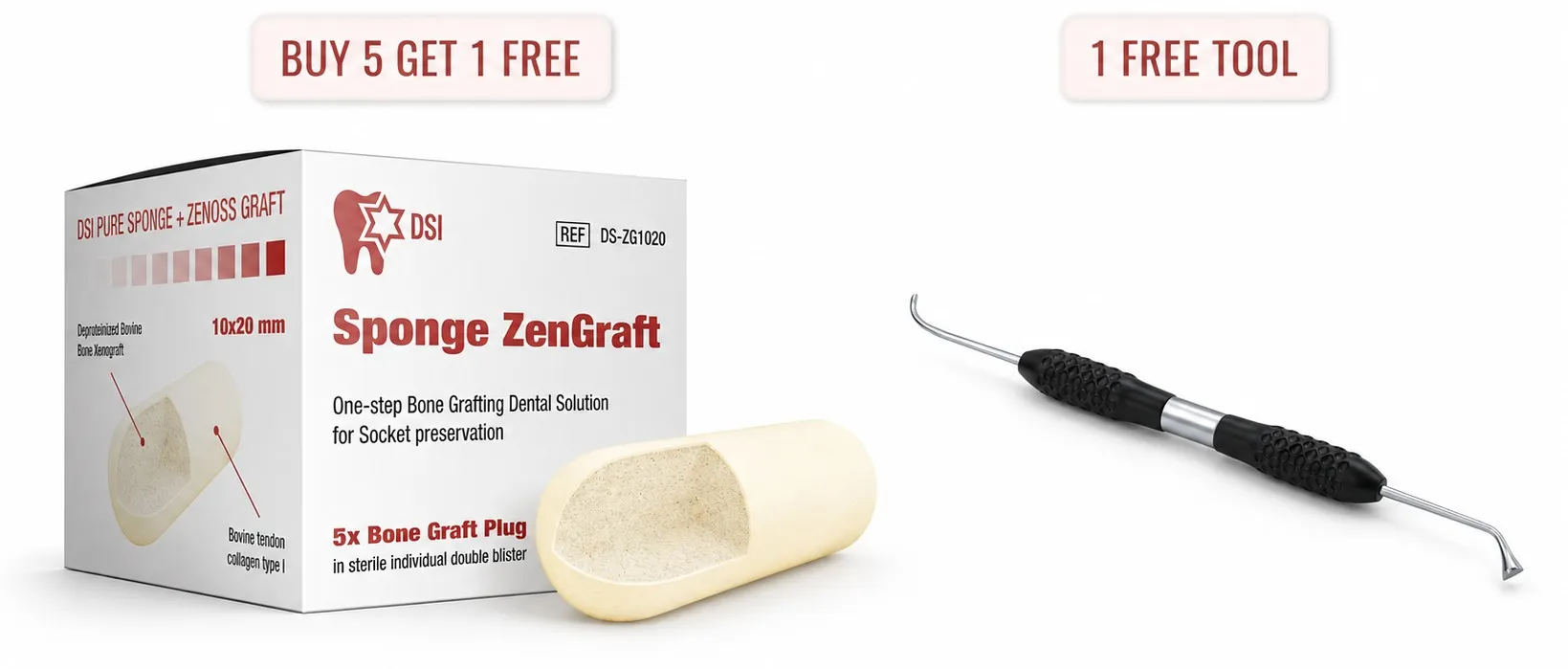
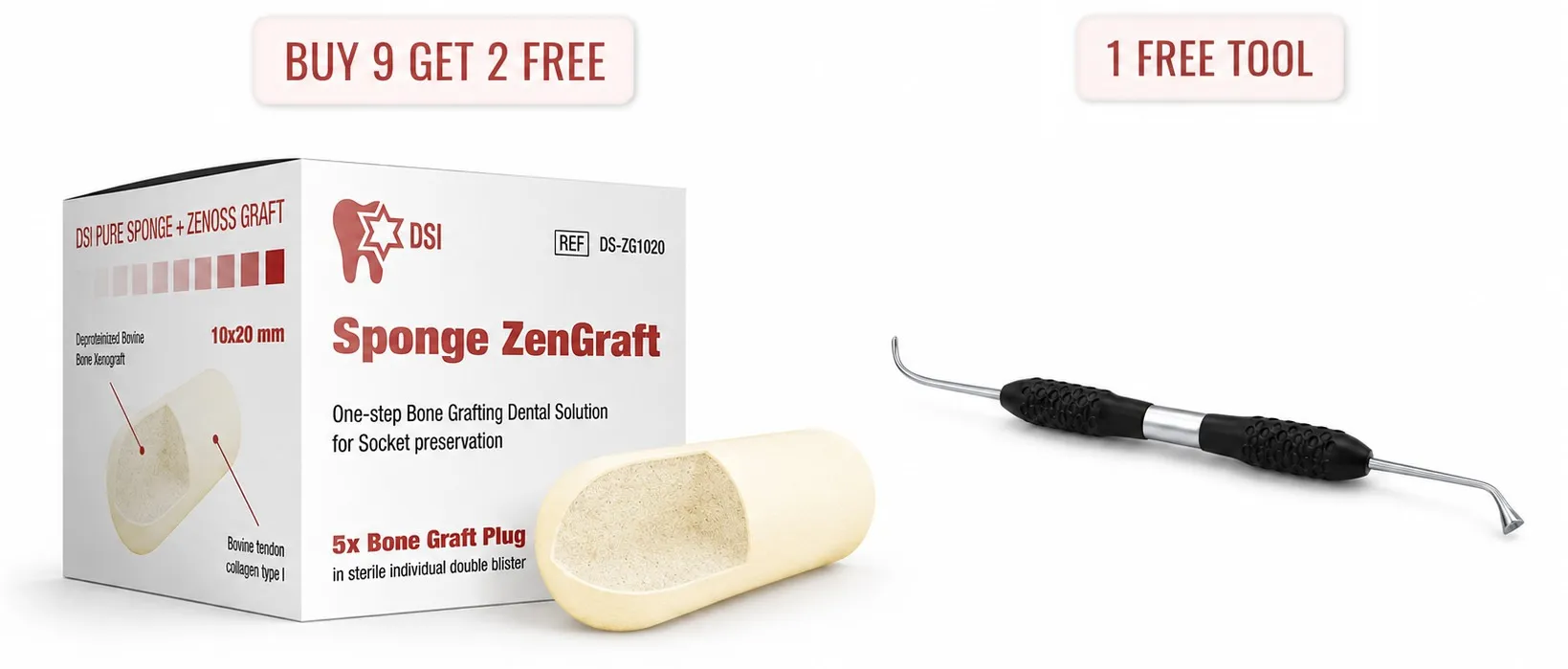
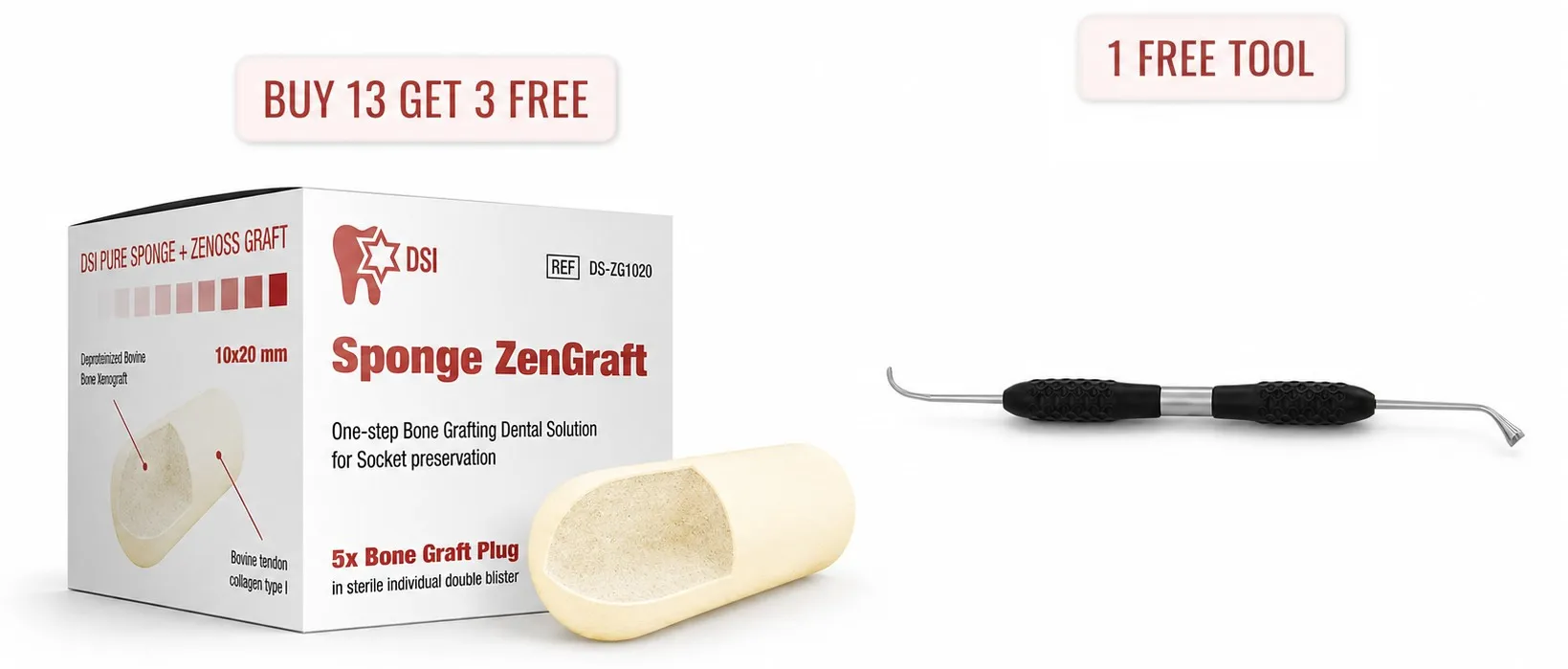
 1 free placement tool, worth $59 2 free boxes, worth $438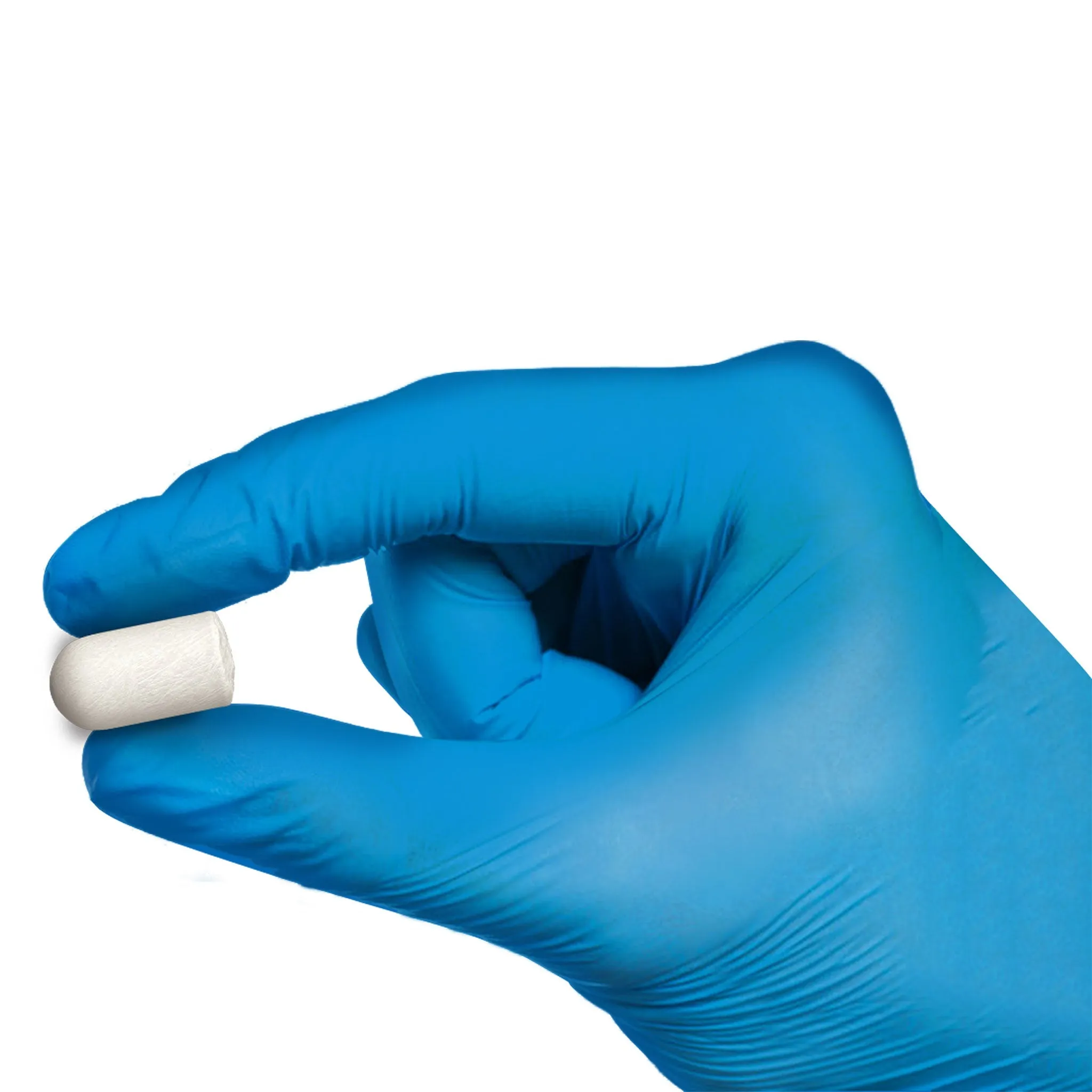
Clinical rationale
After you remove a tooth, the alveolar ridge resorbs predictably. Published research reports that a large share of ridge width and height can be lost in the months following extraction, with most of the change happening early. Wait too long to plan, and what was a routine implant site may need augmentation first.
Grafting the socket when you extract aims to limit that loss and keep enough bone volume for a straightforward implant later. In published work, grafted sites needed extra augmentation at implant placement far less often than sites left untreated.
On timing: Healing time varies with the site and patient. In favorable, contained sockets new bone can mature enough for implant placement in as little as ~3 months, while a more conservative window is around 4–6 months. Always confirm readiness clinically and radiographically before placing an implant.
From the manufacturer
Dr. Miroshnik Vladislav, DMD, Ashdod, Israel
Material and method: vertical and horizontal ridge augmentation using SpongeGraft. Immediate implant placement. 4 months post-op: panoramic + CT.
Dr. Ira Reiz, DMD, Gaithersburg, MD, USA
Central tooth replacement. A light-cured temporary crown material was bonded to adjacent teeth until the site is healed. Layered for higher esthetic. SpongeGraft plug for the post-extraction socket; no membrane used. The site is sutured with PGA sutures.
Dr. Alexey Martynov, Almaty, Kazakhstan
Full video case: three implants installation in the maxillary zone, including lateral sinus lifting. SpongeGraft is used for void filling after the membrane lift. In this video, we cover preparation and the surgery itself.
Dr. Miroshnik Vladislav, DMD, Ashdod, Israel
A case showing another option of using the SpongeGraft, as a bone filler to cover the exposed implant threads, without the membrane. New bone formation around the implants shown at three months.
When SpongeGraft was developed, the core idea was to use outer collagen with a bovine Achilles tendon collagen matrix as the envelope for synthetic bioactive resorbable calcium phosphate particles while creating a structure that mimics the organic and inorganic components of physiologic human bone.
The Bovine Achilles Tendon collagen carries the bone graft for easy and efficient delivery to the site, eliminating the hassle and time spent mixing and packing particulate bone grafts and removing the loose particulate that can wash out.
The Type I collagen acts as a wound dressing not only to stabilise the clot but also to absorb and deliver blood flow to the slowly resorbing graft, a feature critical for the initiation of bone formation and early angiogenesis.
In intact, contained sockets a separate membrane is not required: the material forms its own protective layer to hasten healing and limit cell migration. Because the plug is form-fitted into the socket during the procedure, it helps protect the site and reduce the risk of washout.
After the tooth extraction and standard curettage and debridement protocol, deliver the dry plug into a bleeding extraction site. Suture it over the top.
That’s it. In intact, contained sockets, no separate membrane is required. The collagen carries the graft for easy and efficient delivery to the site, eliminating the hassle and time spent mixing and packing particulate grafts and removing the loose particulate that can wash out. In favorable cases the site can be ready for implant placement in as little as ~3 months; confirm readiness clinically and radiographically before you place.
Faster processing from the initial meeting up to releasing a patient with a final restoration means better chair utilization and better cash flow. Our socket plugs are competitively priced, and with the reduced complexity and cost of surgery, this is a straightforward way to upgrade your dental implant practice.
What clinicians say
Evaluations of the Sponge plugs published by the manufacturer. We supply the same product from Lakewood, NJ.
Prof. Ziv Mazor
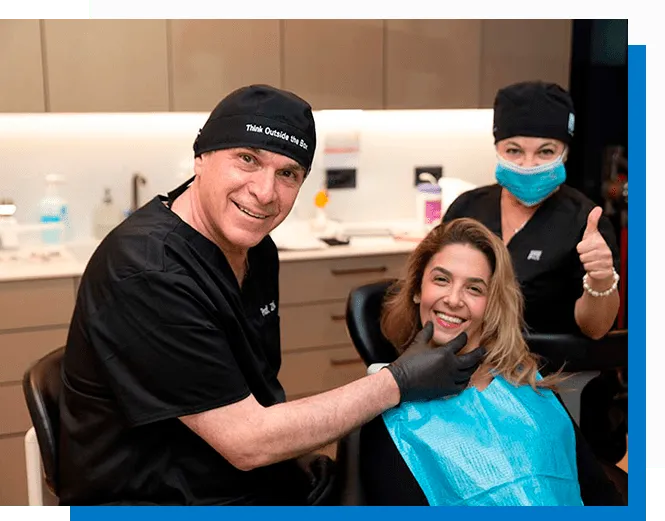
I have been using the Sponge plugs as a routine in my extraction site alone or combined with a biomaterial. Handling properties are excellent. I am very much satisfied with the results.
Clinical instructor and lecturer, periodontal department, Hadassah School of Dental Medicine, Jerusalem
Dr. Zagulyaev Alexander
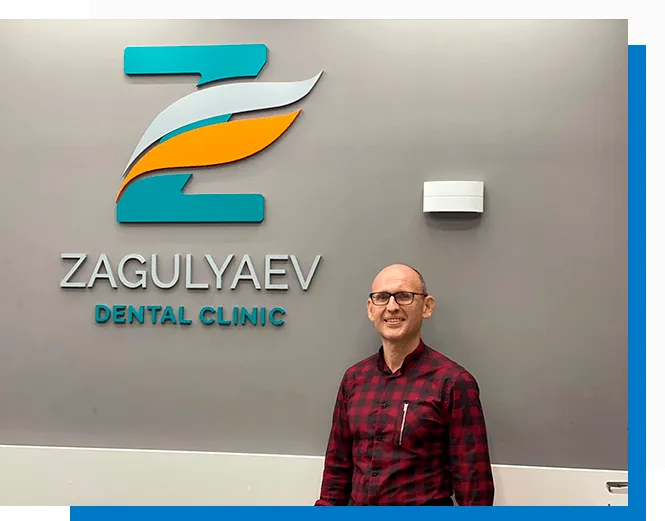
In our clinics, we use mostly compressive implants with an immediate loading technique, “same day teeth”. SpongeGraft is a core part of our clinical protocol for faster and more confident implant loading.
Implantologist, 30+ years of experience and 9,000+ implant restorations; founder of the Z-dent clinic network
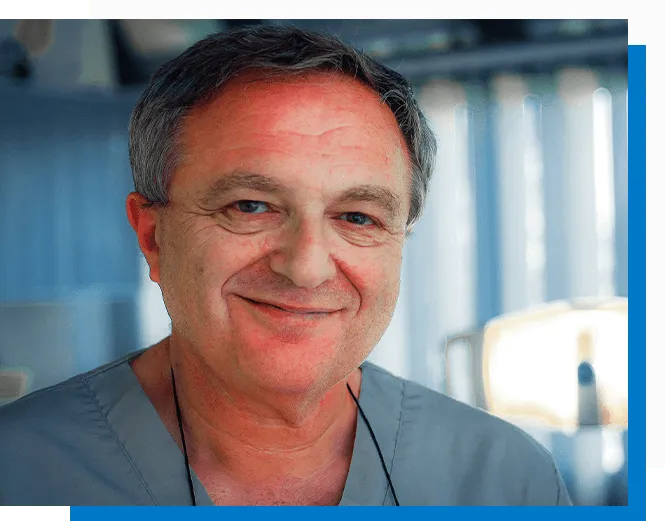
Dr. Miroshnik Vladislav
SpongeGraft is much more than a post-extraction socket solution. With sufficient surgeon’s skill, it becomes a valuable tool, useful in very compromised bone cases.
Local and international lecturer, 40+ years of clinical experience; honorary professor of dentistry
Leave your details and we’ll send your written price and lead times. No rep visit unless you ask.
Your written quote is being prepared. It usually reaches your inbox within a few business hours.
Sending to
Need it sooner or it’s urgent? WhatsApp or call us now.
Before you order
In intact, contained extraction sockets the plug can be placed without a separate membrane as a one-step procedure. Where the socket walls are deficient or the defect is not contained, a membrane is still recommended per standard grafting principles and your clinical judgment.
A plug is at its best in a contained socket with intact walls, where the collagen body can form-fit the site and the walls hold the graft. Where the buccal plate is deficient or the defect is not contained, treat it as a guided bone regeneration case: add a barrier membrane, consider supplementing with particulate, and plan flap management accordingly. We would rather tell you that up front than have you use it outside its comfort zone.
Healing time depends on the site and the patient. In favorable, contained sockets new bone can mature enough for implant placement in as little as roughly 3 months; a more conservative window is around 4–6 months. Always confirm bone readiness clinically and radiographically before placing the implant.
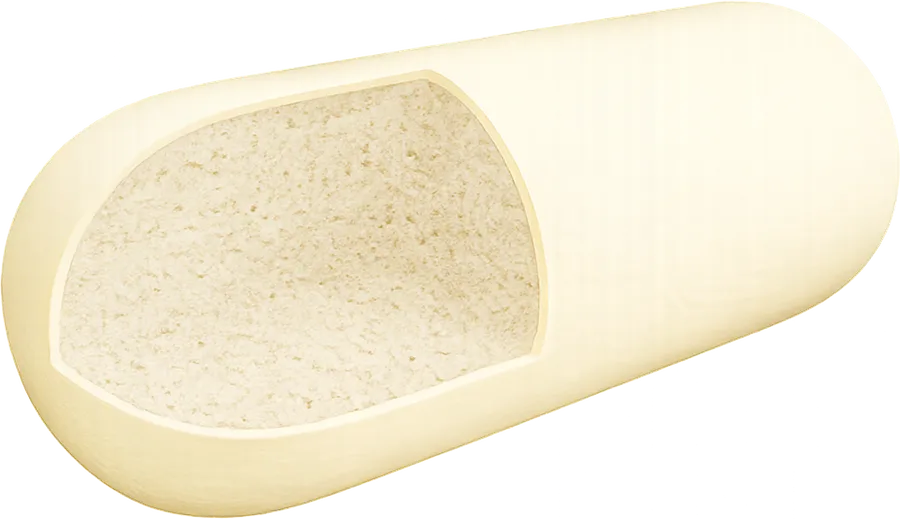
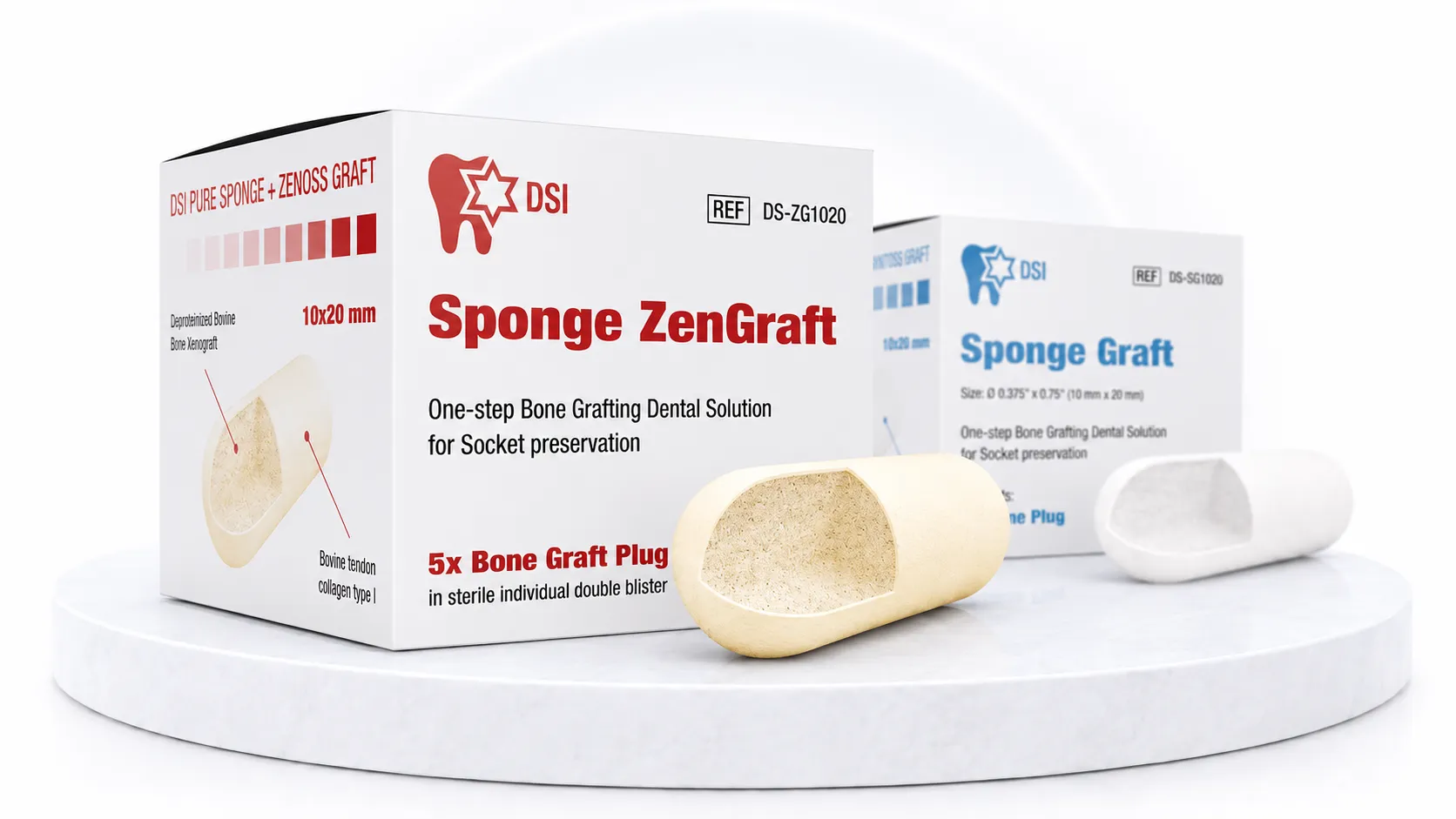
Both are 10 × 20 mm bone graft plugs built on a bovine Type I collagen carrier, placed the same way. The difference is the mineral phase: SpongeGraft (DS-SG1020) uses a synthetic 60% β-tricalcium phosphate / 40% hydroxyapatite blend with a balanced resorption profile, while Sponge ZenGraft (DS-ZG1020) uses a deproteinized bovine bone xenograft that resorbs more slowly, favored when long-term volume maintenance is the priority.
Patients decline xenograft material far more often than synthetic material, usually for religious, vegan, or personal reasons, so it is worth having both on the shelf. SpongeGraft’s mineral phase is fully synthetic (β-TCP / hydroxyapatite), while Sponge ZenGraft’s mineral is deproteinized bovine bone. Be aware that both products use a bovine Type I collagen carrier, so neither is free of animal-derived material — for a patient with alpha-gal syndrome or a strict objection to any animal tissue, that distinction matters and the conversation should be documented. Ask us and we will send the manufacturer’s composition and instructions for use so you can review the sourcing before you treat.
The plug is 10 × 20 mm and can be shaped to the socket. For a narrow or shallow site, trim it with sterile scissors or a scalpel to match the root form; for a wide molar socket, use more than one plug so the site is properly filled rather than stretching one plug over a defect it cannot fill. Ask us and we will help you work out a realistic per-case usage from your extraction volume before you commit to a bundle.
Socket grafting does not require primary soft tissue closure. Published comparisons of primary closure against secondary marginal healing over a grafted extraction site found no meaningful difference in bone volume at re-entry, and advancing a flap moves the mucogingival junction and adds swelling. Many clinicians place the plug, leave it exposed at the crest, and secure it with a cross-suture. Where you already have a flap up, or the defect is not contained, close as your case dictates.
Yes — combining a collagen plug with PRF or PRP is a well-documented ridge preservation approach and clinicians do it routinely. The plug is supplied ready to place dry, so nothing about the product requires it; follow the instructions for use and your own protocol.
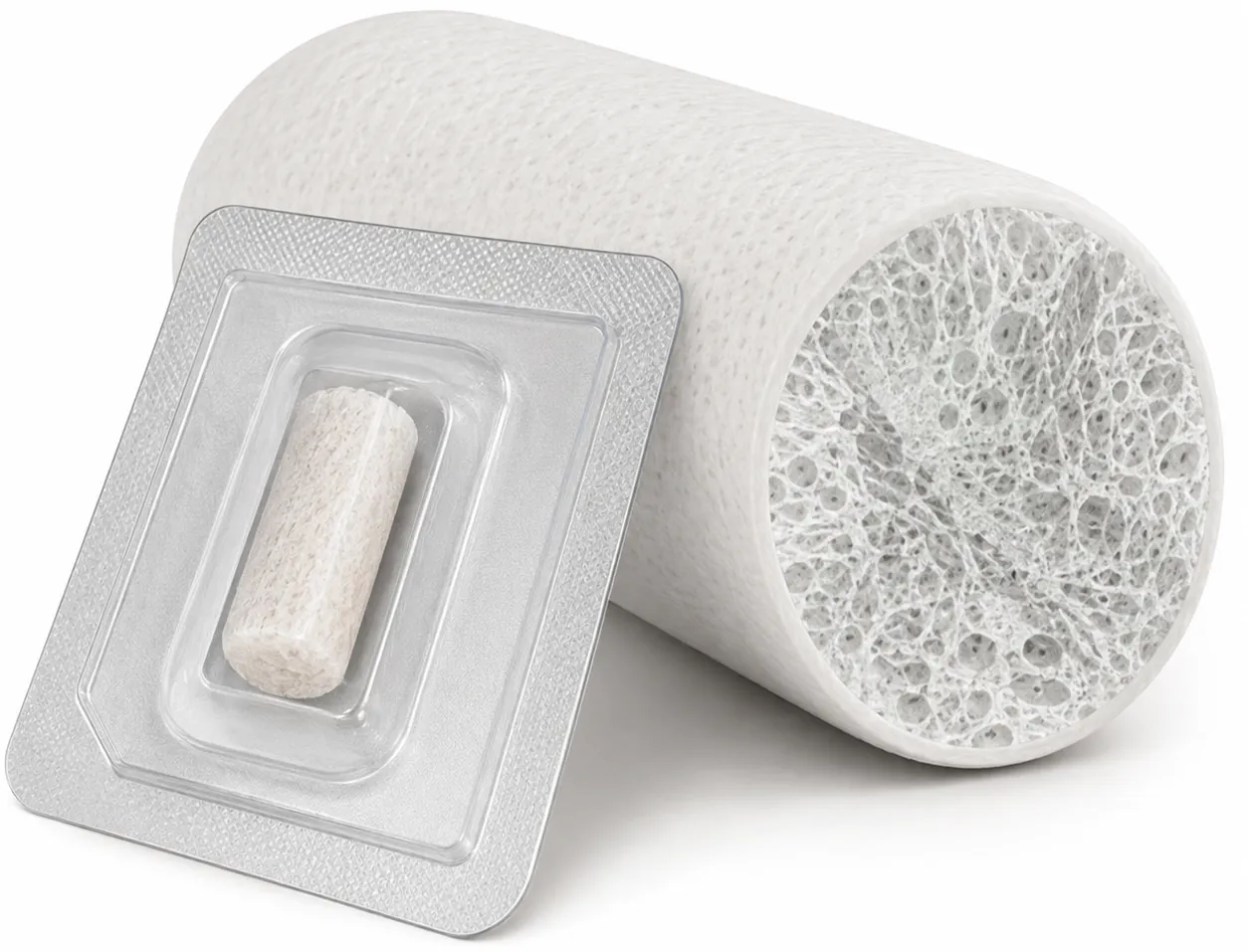
Each box contains 5 plugs, each individually packaged and sterile in a double blister, with instructions for use included. You place the plug dry, directly from the blister. No rehydration or chairside mixing required.
Everything ships in original, sealed manufacturer packaging from our own inventory in Lakewood, New Jersey — nothing is drop-shipped to you from overseas. Every blister carries its lot number and expiry date, and instructions for use are in every box. If you are ordering a larger bundle and want to be sure the dating suits your case volume, ask before you pay and we will confirm the lot and expiry in writing with your quote.
Grafts placed into a fresh extraction site for ridge preservation are generally reported under CDT D7953 (bone replacement graft for ridge preservation), per site. Coverage varies widely between plans and many treat it as elective unless it is tied to a planned implant, so verify benefits and send a narrative with radiographs where the case warrants it. We supply the material — we can’t advise on your billing, and nothing here is a guarantee of reimbursement.
No checkout and no account. Pick your product and bundle, send the quote request (or just call or WhatsApp us), and we reply with a written price and lead times. Confirm by email, phone, or WhatsApp and your order ships from Lakewood, NJ. Your details go to our sales team only, and there’s no rep visit unless you ask for one.
The double-sided tool (SGTOOL) is an autoclavable instrument with a spatula end to grasp and deliver the graft and a bone-pusher end to condense the plug into the socket. It is purpose-built for placing the Sponge plugs, and one tool (a $59 value) is included free with every bundle purchase.
Orders ship from our Lakewood, New Jersey location for fast delivery across the US. Have a question about lead times or a larger order? Call or message us directly and you’ll get a real answer, fast.
Yes. Tell us which product you want when you request your bundle and we’ll confirm the details. If you need a custom quantity beyond these bundles, ask.